Mercer University Professor Receives Prestigious AHA Grant to Advance New Therapy for Drug-Resistant Hypertension and Cognitive Decline
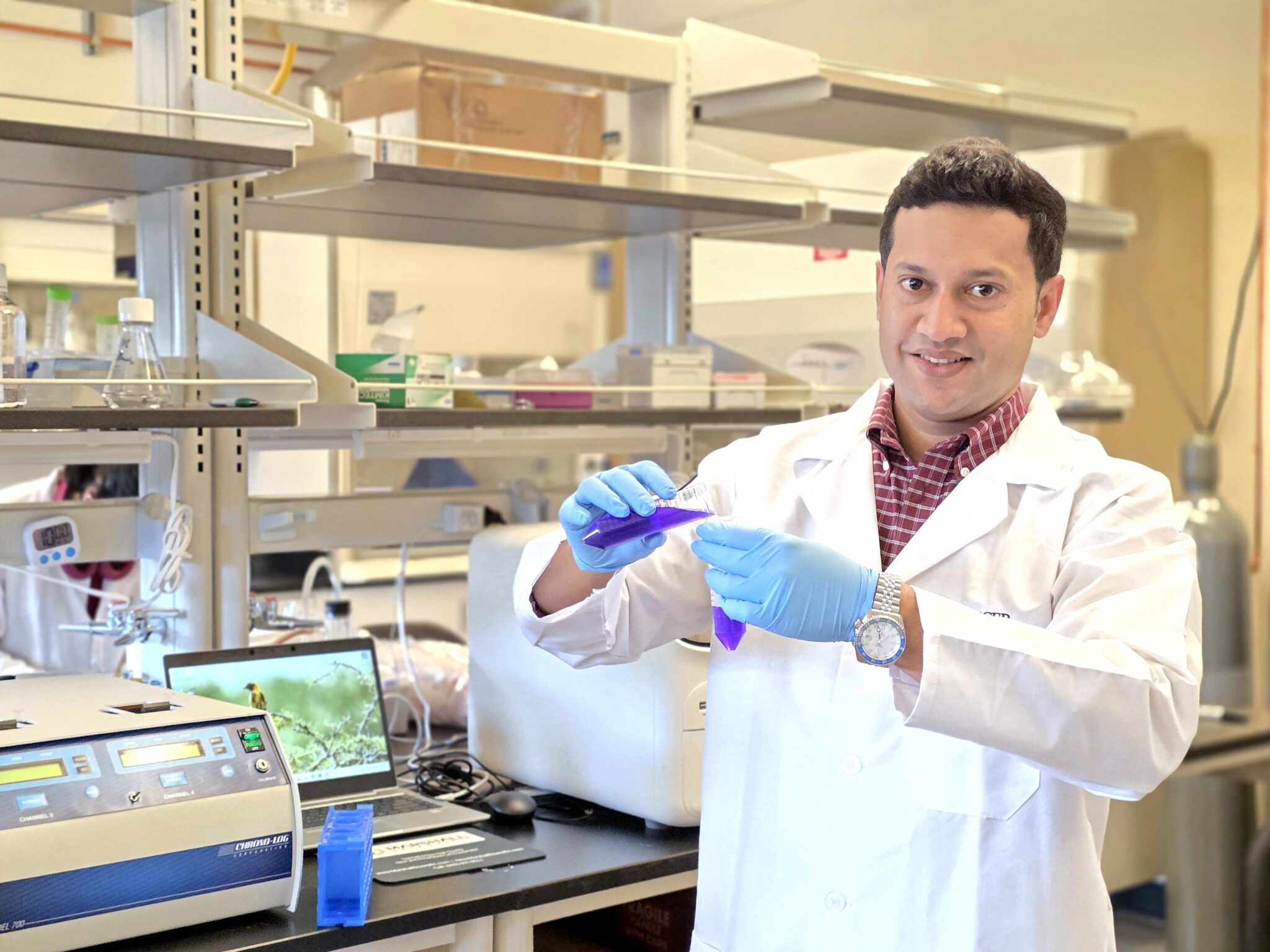
Dr. Raquibul Hasan, Associate Professor of Pharmaceutical Sciences at Mercer University College of Pharmacy, has received a competitive $77,000 American Heart Association (AHA) Bridge Grant as principal investigator for his project, “Novel Dual Targeting of ET-1 Overproduction and Receptor Overstimulation in Salt-Sensitive Hypertension.” Co-investigators Dr. Nasir Uddin and Dr. Renée Hayslett, both from the Department of Pharmaceutical Sciences, will support the project through drug formulation development and cognitive and neurobehavioral studies.
This award marks the fifth American Heart Association grant received by Dr. Hasan’s laboratory, reflecting sustained national recognition of his work in cardiovascular pharmacology and translational research. His laboratory has also secured multiple grants from the National Institutes of Health.
Hypertension remains one of the leading causes of heart disease, stroke, and kidney failure worldwide. A particularly dangerous form, salt-sensitive and drug-resistant hypertension, responds poorly to current therapies and disproportionately affects vulnerable populations. Research increasingly links this condition to cognitive dysfunction, neuroinflammation, and accelerated vascular aging.
Dr. Hasan’s AHA-funded project targets a key biological pathway underlying these outcomes: endothelin-1 (ET-1) signaling. ET-1 is among the most powerful vasoconstrictors in the body and contributes to vascular dysfunction, immune hyperactivation, oxidative stress, and organ damage. While existing therapies block ET-1 at the receptor level, Dr. Hasan’s team is developing a new class of drugs designed to suppress disease-associated overproduction of ET-1 at its source while also blocking its harmful downstream effects.
“This project is built around a fundamentally new therapeutic concept,” said Dr. Hasan. “Rather than unsuccessfully blocking endothelin actions in the body, we aim to suppress its pathological overproduction at the source. By also addressing immune hyperactivation and cognitive dysfunction, we hope to redefine how resistant hypertension is treated.”
Dr. Hasan directs the Hasan Laboratory of Cardiovascular Pharmacology and Therapeutics, where his team integrates molecular pharmacology, vascular physiology, immunovascular biology, and in vivo disease models to develop new therapies for cardiovascular and metabolic disorders.
“This award reflects not only the strength of our science, but also the collaborative effort behind it,” he said. “Our goal is to develop therapies that can improve the quality of life for patients living with resistant hypertension and its long-term neurological consequences.”